← All books
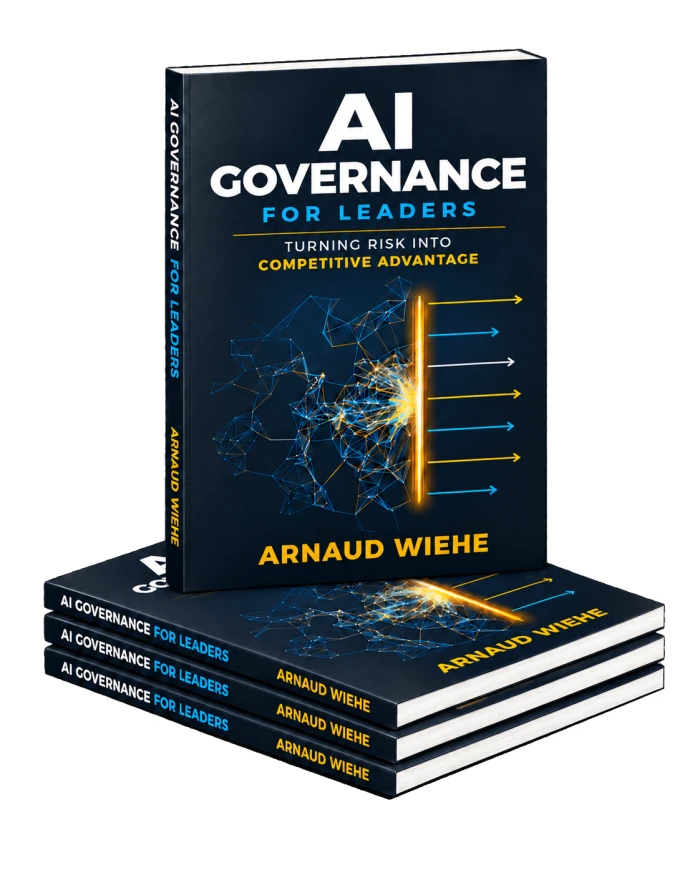
AI Governance for Leaders by Arnaud Wiehe — Turning Risk into Competitive Advantage

2026

AI Governance for Leaders

Turning Risk into Competitive Advantage

A practical guide to governing AI with confidence and turning responsible leadership into competitive advantage.

AI is already making decisions across your organisation. Can your leadership see it, govern it, and answer for it? This book gives board members and executives a practical roadmap for building AI governance that earns trust and supports innovation.

Written for leaders without requiring a technical background, it takes you from discovering hidden AI use to establishing accountability, assessing risk, preparing for incidents, and scaling responsible AI across the organisation.

Across nine chapters, Arnaud Wiehe connects the EU AI Act, ISO/IEC 42001, and the NIST AI Risk Management Framework to the decisions leaders face in practice. Each chapter closes with “Your move”: concrete actions to help you turn what you have learned into a working governance programme.

Who This Book Is For

  • Board members and corporate directors overseeing AI
  • Chief AI Officers and executives building governance programmes
  • Chief risk officers and compliance leaders
  • General counsel and data protection officers
  • CISOs and technology leaders
  • Business leaders responsible for adopting and deploying AI

Key Takeaways

  • Effective AI governance starts with knowing which systems your organisation uses and who is accountable for them.
  • Governance creates business value by supporting reliable deployment, customer trust, and access to new opportunities.
  • The EU AI Act, ISO/IEC 42001, and the NIST AI Risk Management Framework provide complementary foundations for a governance programme.
  • Risk assessment must address bias, explainability, vendor dependencies, and the distinct challenges of generative and agentic AI.
  • Incident preparation, clear decision rights, and meaningful human oversight help organisations respond when AI goes wrong.
  • Lasting governance depends on measurement, AI literacy, and shared responsibility across the organisation.

Table of Contents

Chapter 1: The Awakening: You Have an AI Problem (and You Don’t Know It Yet)
Chapter 2: The Refusal: Why Governance Gets Ignored
Chapter 3: The Mentor: Finding Your North Star
Chapter 4: Crossing the Threshold: Building the Foundation
Chapter 5: Tests, Allies, Enemies: Risk Assessment in Practice
Chapter 6: The Ordeal: When AI Goes Wrong
Chapter 7: The Reward: Operationalising Governance
Chapter 8: The Road Back: Scaling and Embedding
Chapter 9: The Return: Leading with Responsible AI

Chapter Excerpts

The Governance Gap

“How many AI systems are we running?” “Who is accountable for each of them?” These questions from Chapter 1 expose the gap between AI adoption and leadership oversight. The chapter shows how to uncover hidden AI use and build an inventory that gives leaders a clear starting point for governance.

From Frameworks to Decisions

Chapter 3 explains how the EU AI Act, ISO/IEC 42001, and the NIST AI Risk Management Framework fit together. It helps leaders understand their different purposes and choose a practical approach suited to their organisation, building on the governance structures they already have.

When AI Acts Alone

“As AI systems transition from tools that respond to queries to agents that pursue objectives, the burden on human governance intensifies.” Chapter 9 examines what changes when AI can plan, act, and make connected decisions with limited human review. It explores the boundaries, oversight, and accountability leaders need as these systems take on greater responsibility.